Thursday, 16 May 2013

Coffee & Walnut Cake v.2


Four years ago, when I first posted about this cake, I had a tempestuous relationship with the icing.

Behind the scenes, the icing in that post caused a fit of frustrated weeping (which was very embarrassing, as my then-brand-new-now-ex boyfriend was staying with me at the time - and let's face it, I was probably trying to impress him). Luckily I left it mixing and a few minutes later, it had whipped itself back.

Mum and I had been making the cake for years - it was my granny's favourite - but because we didn't understand the reasons and techniques behind the recipe, the icing was always nerve-wracking to make.


Delia calls the icing 'mousseline' (which appears to be a catch-all term for various things enriched with butter or whipped cream) but I think it's more accurate to call it French buttercream. One of our first exam dishes at Cordon Bleu involved French buttercream - it's a lot like Italian meringue buttercream except it's based on egg yolks instead of whites. I didn't realise the icings were the same until I made the cake for the first time in a few years for mum's birthday in April. I also found that my old recipe was too brief and not very clear, so I thought this was a good opportunity to talk about French buttercream and rewrite it.

The first step is getting the syrup to the right temperature. I'd recommend testing with a thermometer because it's easier and the finger test takes time. Having said that, if you don't have a thermometer or want to try it out, it's quite fun. The test for thread stage is to spoon a bit of the syrup onto a plate, then wait for it to cool. Squidge some syrup between your thumb and first finger then pull them apart slowly until you have a gap of about a centimetre - a thread of syrup should stay linking the two.


One of the problems is that different recipes take the syrup to different temperatures. It doesn't help that the temperatures stated for the stages seem inconsistent too - for instance, we were taught that soft ball was 116-122C but McGee says it's 113-116C. Thread, similarly, is 105-110C or 102-113C. Though others go to soft ball, Delia recommends 103-5C for this - I've been taking it up to 110C and that has been working well, so I've settled for that.

The second step is to pour the syrup down the bowl into the whisking egg yolks. I found it quite hard to visualise at first and mum used to get into a tangle by pouring the syrup into the whisk and it spinning everywhere, so I decided to do a little video for you. Excuse the little slip of the pan near the end - I'd recommend using a smaller saucepan with a long handle as they're easier to control.


After that, you leave it to whisk until cool. It's really important that the mixture is room temperature before you start adding the butter or it'll melt and create a mess.

Once it has cooled, you add the butter bit by bit. To illustrate the speed to add it (and because I find watching the mixer going round mesmerising), here's a clip of the middle of the step. Also note that I often squish the cube I'm about to add to give it a last minute bit of warmth and pliability. The butter needs to be room temperature but not melting or greasy.


Once the butter is all in, give it few more moments to whip. Finally, you can add flavourings - in this case, coffee.

If it goes a bit curdled towards the end, this can usually be fixed by whipping it for longer. If not, try putting it in the fridge for 15 minutes then whipping again.

Though the icing is rich, I like it much more than normal buttercream. The bitterness of the coffee and touch of salt cuts through the limited sweetness. It's also very smooth and thick, which is particularly lovely against the crispy-edged cake and toasted walnuts.


When I was making the cake in the photos the other day, I realised I'd run out of unsalted butter when I needed to start warming it up for the icing. I had some salted in the fridge so I decided to try it. The icing finally tasted exactly like I remember it.

It reminded me that mum always used to use salted butter for her baking - partly because that was what was in the fridge - but also because it was apparently harder to buy unsalted when I was little. It made me wonder if something got lost in translation as unsalted became more popular, as many modern baking recipes use unsalted and don't add salt. Perhaps it's because people weren't used to having to add extra salt to sweet dishes as traditionally the butter was salted to preserve it. I guess it's also because of health concerns.

Generally the reason unsalted is preferred is so that you can control the amount of salt. I think a pinch of sea salt improves nearly all baking and desserts. It's useful to have the control as packets vary - my salted butter had 1.8% salt, which is therefore 2.7g in the 150g butter I used. It is quite a bit and while I personally think it tastes amazing in the icing, it would be too much in some other recipes.


Coffee and Walnut Cake
(adapted from Delia Smith's Book of Cakes)

For the cakes:
60g walnut halves + 12 for decoration
1 tbsp instant coffee* + 1 tbsp boiling water
110g unsalted butter, at room temperature
110g caster sugar
2 eggs
110g plain flour
1.5 tsp baking powder
pinch of fine sea salt

For the icing:
2 egg yolks
pinch of salt (or a little more, to taste, or use salted butter)
60g caster sugar
60g/ml water
150g unsalted butter, cubed, at room temperature
1 tbsp instant coffee* + 1 tbsp boiling water

Preheat the oven to 170C/340F. Toast all of the walnuts for 5 minutes then remove the 12 halves for decoration and chop the rest roughly. Grease then line the bottom of two 7" round tins. Combine the coffee and water in a bowl or mug. Cream the butter and sugar together for several minutes until very pale and fluffy. Meanwhile, sift the flour, baking powder and salt together. Beat the eggs lightly together in a jug or bowl then add small amounts to the mixer, beating well in between each addition. When all the egg is incorporated, add the flour and mix on low until combined. Add the chopped walnuts and coffee and fold through. Divide between the tins and smooth out - it will feel like there isn't much mixture but don't worry. Bake for about 25 minutes until a deeper, rich brown and a toothpick can be removed cleanly from the middle. Leave to cool for 5 minutes then turn out of the tins and leave to cool on a rack.

For the buttercream, put the egg yolks and salt into the bowl of a stand mixer with the whisk attached and whisk briefly until broken up and a bit frothy, then turn off. Place the sugar and water into a small saucepan and place over medium heat with a sugar thermometer attached. Once the sugar has dissolved, turn up to medium-high, occasionally giving it a gentle swirl, until it reaches 110C/230F. This takes me about 5-6 minutes (the last 10 degrees are often the slowest). The moment the temperature hits, turn the yolks up to medium speed then steadily pour the hot syrup down the side of the bowl, resting the lip of the pan on the top of the bowl (see video above).

Turn the mixer up and leave to whip until you can't feel any heat in the mixture - this takes about 7 minutes (check if it is cool by touching the outside of the bowl, then if that is room temperature, testing the mix itself with a finger). If it is cool, start adding the butter, which should be soft and pliable but not greasy. Add the butter cube by cube, letting each piece disappear before you add the next. At stages it might start looking weird or curdled but just keep whipping and slowly adding the butter - this all takes about 7 more minutes. When you've added all the butter and have a thick, glossy buttercream, whip in half the coffee, followed by the other half.

Place one of the cakes on a serving plate. Spread half of the buttercream over the cake then place the other cake on top. Spread the remaining buttercream over the top then decorate with the remaining walnut halves.

(Makes 12 small slices)

* This cake tastes weird to me with anything other than cheap instant coffee as that's what I grew up with. Feel free to try using very strong proper coffee, though I'm not quite sure how you'd get a thick concentrate like this.


***

On another note, I want to briefly talk about Pinterest.

A few months ago I was contacted about working with Pinterest on their Pin it Forward UK campaign to improve their UK service by making the suggestions when you join more regional (so, for instance, it's easier to find people who pin links to recipes in metric rather than cups). I wasn't sure about saying yes considering my policy about these things but as I genuinely enjoy pinning I decided to make an exception (perhaps I should declare at this point that they bought me a delicious raspberry, ginger and apple juice at our meeting and I had a few orange juices at their launch party...). A blogger is posting every day during the campaign - tomorrow Kavey will take over.

I use Pinterest for three things. I use it as a bookmark tool for recipes I want to make, articles or quotes I want to keep, ideas for the house I want to try, clothes or shoes or stationary I want to buy and a combination of all those for parties I'm going to throw. Secondly, I use it to pin each new post I write onto my Poires au Chocolat board.

Finally, I use it for my food books board. I pin my favourite books from amazon so they're easy to find and buy if one takes your fancy - though, of course, you could get it from your local independent bookshop too. I write a short introduction or mini-review in the description for each one. I only pin books I've read recently, or in the case of recipe books, made at least three things. This is the board I chose for them to feature on their suggested food & drink boards for new followers.

So that's why and how I use it. My profile is here and this is the link to click if you want to sign up.


Thursday, 9 May 2013

Sarah's Syrup Sponge


Sarah, one of my best friends from university, moved back to Scotland when she finished her degree. It's really quite inconvenient.

A few weeks ago I flew up to Edinburgh for a long weekend. On the Friday night, we headed out for dinner at the Scran & Scallie, Tom Kitchin & Dominic Jack's new restaurant. We had a very enjoyable (though maybe a touch over-seasoned) meal and finished it off with 'Alison Jack's Syrup Sponge' (in a fit of curiosity I asked them about Alison Jack's connection to the sponge on twitter - no reply so far, though I presume she is part of Dominic's family).

We shared the pudding - a little round ceramic dish with a thin layer of hot cake soaked from the bottom up in golden syrup with a rich scoop of vanilla ice cream melting languidly into the sponge - and then walked round and round the park, catching up.


As she was driving down with her family last weekend to graduate (Oxford has - of course - got a weird and delayed system for graduations), Sarah made me promise that I'd make syrup sponge for her when she came to stay.

Usually syrup sponges are steamed but as our pudding was baked, I went for that (it's also much faster and less fiddly). Essentially, this is a thin layer of all-in-one brown sugar sponge cloaking a lake of golden syrup.

To create the individual portions we were served, I tried baking it in small ramekins. I didn't get the sponge/syrup ratio or portion size right the first time. The second time I was making it for post-graduation brunch as there was no other time I could make the sponge for Sarah. I didn't know exactly how many people were going to turn up (family plans, hangovers...) so I decided to make it in a bigger dish and slice it up just before serving. Either option works, though with a bigger dish you avoid the hazard of serving piping hot ramekins.


Before you ask, I don't think there is a substitute for golden syrup in this recipe - just like treacle tart, it's the whole point. Also, please don't ignore the salt - you need it to balance out the sweetness (just like salted caramel).

As it cools, the sponge soaks up syrupy sauce, so for pudding it's best to eat it while it's still hot. When it gets cold it's a treacle-tart-cake cross, which is really quite delightful (and perhaps easier to understand for those who haven't grown up with treacle tart).


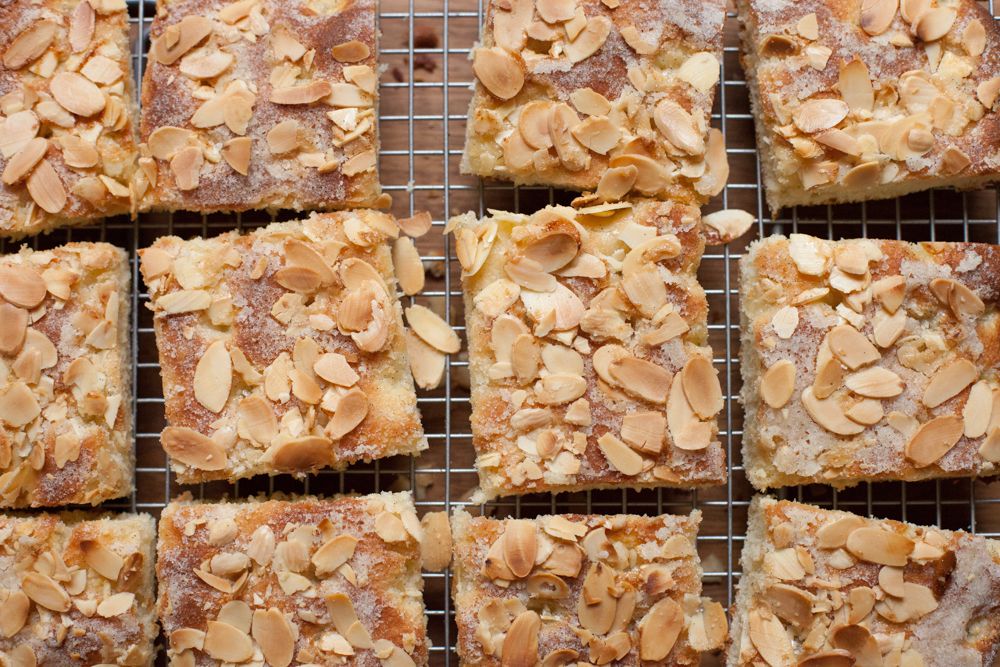
It's worth keeping in mind that the point of this pudding is that it's sweet - sweeter than I'd normally go for, but that's the pleasure of it. I now serve little squares - six per batch - but you could do four, or even fewer. I find 1/6 with ice cream just right - it leaves me feeling satisfied but not stuffed or woozy. It would be easy to scale this recipe up for a crowd - I can imagine serving it at a big party from a roasting tray. You can also serve it with a few berries, now summer is coming. I had some strawberries on hand when I made this yesterday, which gave a juicy colour contrast. I think some tart raspberries would pair well too.

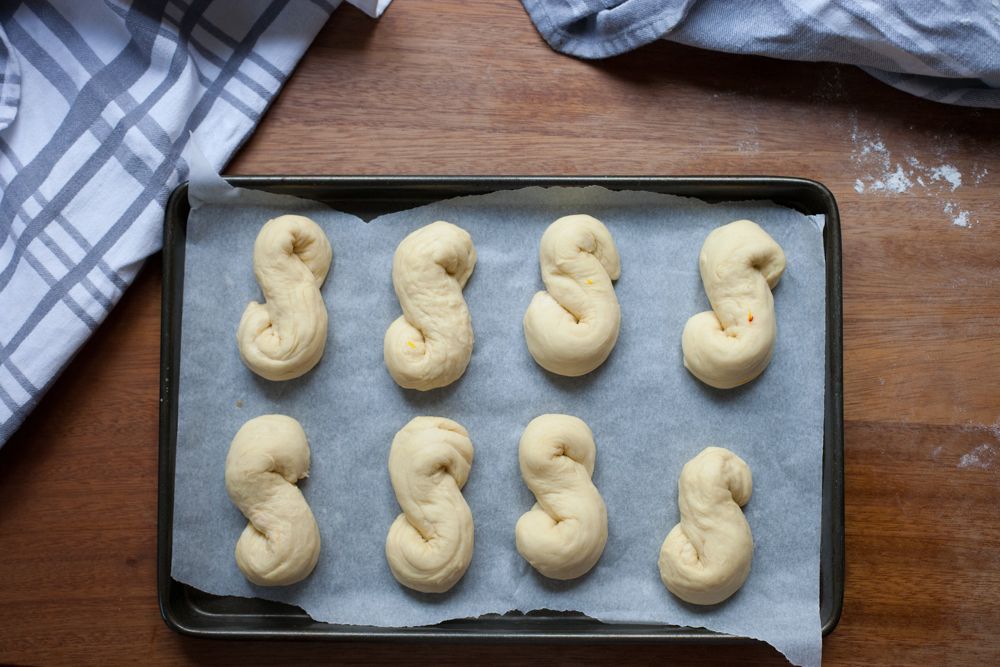
It was surprisingly emotional watching my friends graduate (and scary to think that mine was a year ago and that it's two years since I was slaving away for finals). The next morning, we had our brunch. We had a plaited milk loaf (from Scandilicious Baking) with lots of different spreads, croissants and pain au chocolat from the bakery, chunky slices of bacon, feta & spring onion frittata (from the Smitten Kitchen Cookbook) and lots and lots of tea. Then I served up slices of hot syrup sponge with a big, melting scoop of ice cream. The room fell silent for a minute.

Sarah gave it her approval.


Sarah's Syrup Sponge

3 generous tbsp golden syrup
1 egg
1/4 tsp vanilla extract
50g unsalted butter, at room temperature*
50g plain flour
40g light brown sugar
1/4 tsp baking powder
2 pinches of salt

Preheat the oven to 160C/320F. Spoon the golden syrup into the bottom of a dish (roughly 7x5"/18x13cm) or 4-6 ramekins (about 3"/7cm) and let it spread out. Lightly beat the egg and vanilla together. Place the butter into the bowl of a stand mixer (or use a electric hand whisk) and beat for a minute to soften. Sift the flour, sugar, baking powder and salt into the bowl then add the egg mixture and beat just until combined. Spoon the batter over the syrup then spread it out into an even layer. Bake for around 25 minutes for one sponge and around 10-15 minutes for ramekins - the sponge should have risen and set, turned golden brown and you should be able to remove a toothpick cleanly. Slice and serve straight away with vanilla ice cream (let the ramekins cool a bit - the heat in the ramekin will keep the syrup at the bottom very hot at first) and possibly some fruit.

(Serves 4-6)

* You can also use salted butter and not add the pinches of salt.


Three more recipes that use golden syrup:
Gingernuts
Salted Caramel Brownies
Treacle Tart

Thursday, 2 May 2013

Roasted Hazelnut Butter Biscuits


Have you heard about cookbook clubs?

Essentially, every month you pick a book, a host and a date. Everybody chooses one or two recipes from the book, makes them and brings them along. Then you have a big feast.

A local cafe chef set up our cookbook club in Oxford, inspired by Tea's post How to Start a Cookbook Club. I really recommend starting one up - they're a great way to meet new people in your area and try recipes and books you wouldn't necessarily pick otherwise.


Last month we decided on Jerusalem by Yotam Ottolenghi and Sami Tamimi. I had planned to make the Chocolate Pecan Krantz Cake again but I was late back from my weekend in Edinburgh (read: I missed my flight home...) and didn't have time to set it up.

Instead, I made the Tahini Cookies (picture here). I wouldn't have picked them out normally but they were the only things I could make with the ingredients I had on hand after a weekend away. I was worried that the tahini flavour would be a bit odd in cookies but we were all pleasantly surprised by how much we loved them.


While I was standing over the mixer, watching the tahini whirl into the creamed butter and sugar, I started thinking about the idea that tahini is essentially puréed sesame seeds - like a thin nut butter. That reminded me of hazelnut butter, which is a bit thinner than other nut butters and absolutely delicious.

So, of course, I had to try a hazelnut version of the tahini cookies.

I first made roasted hazelnut butter a few years ago - it's so simple yet really lovely. All you do is roast the hazelnuts, roughly skin them and then food processor them until smooth and slick with a pinch of salt. I've only tried it with hazelnuts but the process is the same with other nuts (including, of course, peanut butter). I like it smeared on toast with swirls of raspberry jam.


Unusually, the tahini cookies recipe tells you to knead the dough in the mixer and by hand before portioning it. It does make it smoother but I found that when I skipped the step and just brought the dough together as I shaped it into a ball it didn't change the texture particularly and made life easier.

I also tried making the biscuits in the food processor (combining the butter and sugar with the paste already in there, then continuing as before) to save on time and washing up but the texture wasn't quite as good. I found it crumbled a little more than normal - they're quite crisp usually, which I really like. Because they're crisp through (though admittedly with a slightly, slightly moist centre) and keep really well, I've also called them biscuits instead of cookies.

After two batches I decided I needed to ramp up the hazelnut flavour, so I came up with the idea of rolling the cookies in ground hazelnuts and squishing them with a flat object rather than a fork. I think they look really pretty with the speckled nuts and little cracked edges and they gave me the flavour boost I wanted.

I love hazelnuts and I'm really pleased to have a recipe on hand that focuses purely on their flavour. It's also a great excuse to keep a batch of roasted hazelnut butter in the fridge.

*

Finally, I'm incredibly honoured to have been picked for The Guild of Food Writers Awards shortlist for Food Blog of the Year 2013! I never thought I'd make the list again after winning last year so the call was a big surprise. I was actually on a coach going into London when my phone went - I think I might have disturbed the other passengers with my enthusiasm...


Roasted Hazelnut Butter Biscuits
(inspired by the tahini cookies in Jerusalem by Yotam Ottolenghi and Sami Tamimi)

100g whole hazelnuts, skin on*
pinch of salt
80g unsalted butter at room temperature
70g light brown sugar
1 tbsp crème fraîche or double cream
1/2 tsp vanilla extract
135g plain flour

Preheat the oven to 180C/350F. Lightly grease a large baking tray. Pour the hazelnuts onto a small baking tray and roast for 8 minutes or until the skins have darkened and cracked open in places. Rub the skins off - some will stick but as long as you get about 2/3 off, don't worry. Tip into a food processor and pulse until the nuts are finely ground. Remove 30g of the ground nuts from the mixer. Add a pinch of salt to the mixer then pulse the remaining nuts until they become a smooth paste (with such a small amount you may need to scrape down a few times). You could now transfer this to a sealed jar and keep for up to a few weeks in the fridge - the ground nuts would need to be kept in a sealed bag.

Place the butter and sugar in the bowl of a stand mixer and beat just until creamy and uniform. Add the hazelnut paste (about 65g), crème fraîche/cream and vanilla to the bowl and beat until combined. Finally add the flour and mix on the lowest setting until combined. Increase the speed briefly to bring the mixture together into a smooth dough. Take a 20g chunk of the dough (about the size of a whole walnut shell or a squash ball) and roll it between your palms until smooth. Tip the ground hazelnuts out into a shallow bowl then roll the ball of dough around until fully coated. Transfer to the baking tray then repeat with the rest of the dough - I usually get 16-17 biscuits. Use a palette knife or similar to flatten the cookies to about 1 - 1.5cm thick.

Bake for 14-16 minutes, turning the tray once at 10 minutes to help get an even colour. The biscuits should be a deep golden colour, slightly bigger and have a few little cracks around the sides. Leave to cool on the tray for 5 minutes then fully cool on a wire rack. I think they're better a day or two later and they keep in a tin for at least a week (I haven't managed to keep a batch longer than that!).

(Makes 16-17 biscuits)

* If you'd prefer to make a big batch of the paste, feel free to use more nuts. To make the biscuits, scoop 65g of the hazelnut butter into the cookie dough.


Three more posts about hazelnuts:
Fig & Hazelnut Crumble Bars
Chocolate Hazelnut Torte with Smoked Salt
Homemade Nutella - a dégustation

ShareThis