Showing posts with label easter. Show all posts

Thursday, 17 April 2014

Hot Cross Buns v.5


"Morel, as usual, was up early, whistling and sawing in the yard. At seven o'clock the family heard him buy threepennyworth of hot-cross buns; he talked with gusto to the little girl who brought them, calling her "my darling". He turned away several boys who came with more buns, telling them they had been "kested" by a little lass. Then Mrs. Morel got up, and the family straggled down. It was an immense luxury to everybody, this lying in bed just beyond the ordinary time on a weekday. And Paul and Arthur read before breakfast, and had the meal unwashed, sitting in their shirt-sleeves. This was another holiday luxury. The room was warm. Everything felt free of care and anxiety. There was a sense of plenty in the house."

Sons and Lovers, D. H. Lawrence, 1913, Chapter 7 (describing Good Friday).


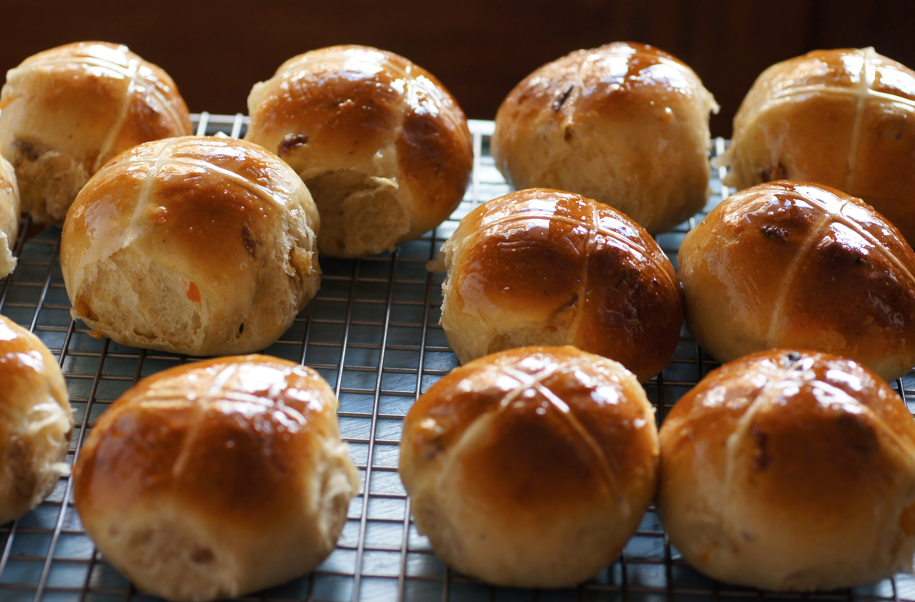
After last year, I wanted to look at another element of the history of hot cross buns. I did start looking at the Elizabeth I decree a few weeks ago but sadly it seems I've run out of time (I blame the ebook). I have made some buns today, though, and I thought the Sons and Lovers quote was worth sharing.

The things I did differently this year:
- Switched the caster sugar for brown sugar.
- Put the dough in the fridge overnight for the first rise.

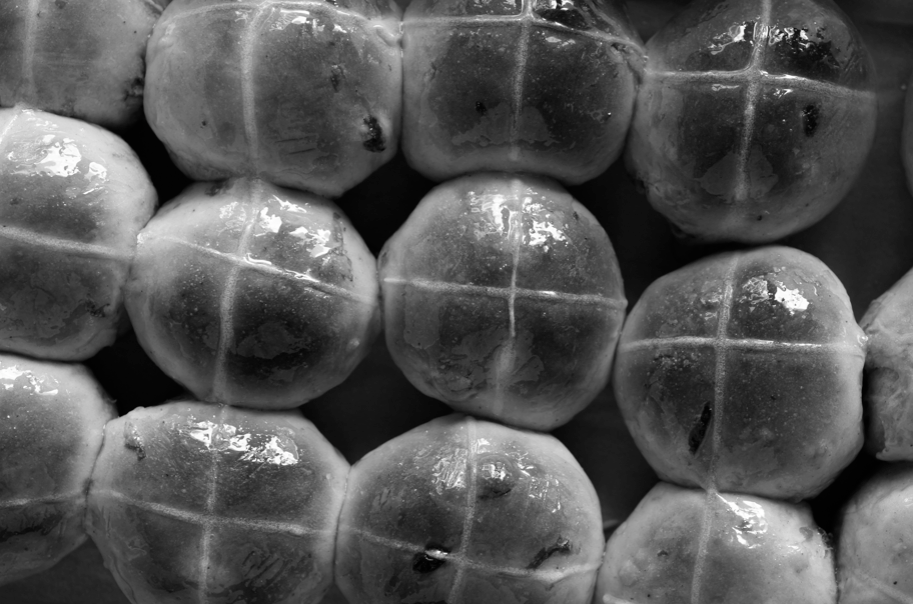
I also experimented with using a gluten free flour mix for the crosses, to see if it stopped it clumping up a bit. It wasn't a good idea - it was hard to pipe and went a bit weird in the oven.

The recipe from last year still stands - rather than writing it out with so few (and not especially big or essential) changes this year, it seems simpler to direct you back: Hot Cross Buns v.4.


Finally, Poires won the Best Use of Video award at the SAVEUR Best Food Blog Awards 2014! Thank you so much for your votes - I never thought I'd win a Readers' Choice award. They're flying me to Las Vegas for the awards party next month, which should be an excellent adventure.

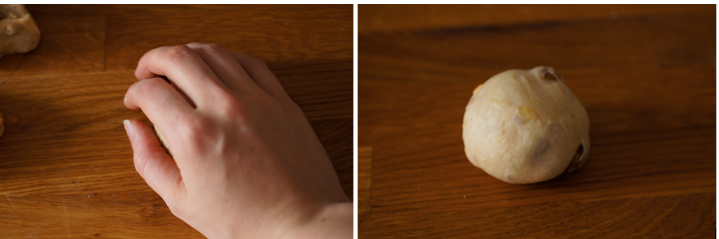
To celebrate, I made a little video of the bun shaping process I use (the one I explained with words and pictures in v.3). Normally I avoid direct sunlight for photos & videos but the buns needed to be shaped so I thought I'd go outside my comfort zone a little. I'm not sure I like it but I can't really resent a sunny spring morning.

Thank you, once again, for your support - it means a lot.


The other versions:
Four
Three
Two
One

Friday, 22 March 2013

Hot Cross Buns v.4


If you flip to the 'Bun: Hot Cross Bun' entry in the Oxford Companion to Food, you'll find the idea that the Saxons ate buns marked with a cross in honour of Eostre, a goddess of light, and that her name was transplanted to the Christian festival of Easter.

It sounds fascinating. Yet the only vaguely contemporary mention of Eostre is in Bede's eighth century 'De temporum ratione' (a.k.a. The Reckoning of Time). Chapter 15 describes the Anglo-Saxon names for the months of the year - April is called Eosturmonath, after Eostre "in whose honour feasts were celebrated". Bede notes that her name has transferred to Easter, "calling the joys of the new rite by the time-honoured name of the old observance". (ed. Wallis, 1999). In this - the only mention of Eostre - there's no description of the contents of the feasts or of crossed buns.

As this is part of the time period I studied (though I really focused slightly later), this whole idea started nagging at me, especially when I saw how often it's repeated. Where did it come from?


According to the OED's etymology section for 'Easter', some scholars believe Bede made the goddess and the name connection up. I don't think I agree - it seems odd for Bede, a devout monk, a famous biblical scholar and a historian, to invent a claim that Easter had any association with paganism. We have a small number of surviving manuscripts from the period so it's perfectly feasible that other references were lost or never recorded. The OED's alternative claim for the history of the word sounds convincing - but that doesn't mean Bede made Eostre up.

During the conversion of the English, the Christians tried to adapt the existing structure of worship to the new religion. The idea of the transference or merging of a festival - and, within that, food - therefore seems possible. This concept of adaption and exchange is recorded in Pope Gregory's letter to Abbot Mellitus in 601, which was preserved by Bede in his Ecclesiastical History. Pope Gregory writes that they should not destroy the existing temples but clear them, destroy the idols and turn them into churches, so the people can worship at the place they are accustomed to. Instead of sacrificing oxen to their pagan gods, the people should kill the oxen for a Christian feast.

After all, "there is no doubt that it is impossible to efface everything at once from their obdurate minds; because he who endeavours to ascend to the highest place, rises by degrees or steps, and not by leaps." (ed. McClure, 2008).


Next, I had a look through my books on medieval food to see if I could find any relevant information. I couldn't find anything, so I sent an email to my beloved-tutor-now-friend asking if she had any ideas about where I could look. She pointed me towards the rest of chapter 15, where Bede mentions that Solmonath (February) "can be called 'month of cakes', which they offered to their gods in that month" (ed. Wallis, 1999). As the cakes were given as offerings to 'their gods' in general, Eostre was probably included. The division between bread and cake would not become clear for centuries, so it's not too much of a stretch to imagine the cakes were what we would call loaves or buns. But where does the cross come from? Did the buns become associated with Good Friday because of their existing cross or were they made to fit the occasion?

I haven't found the answer to the cross questions, but I think I've found the possible origin of the Oxford Companion's claims - an article in the New York Times from 1912, Who were the first to cry 'Hot Cross Buns?'. Along with the Saxon claims, it includes the Greek and Roman versions that the book mentions (that I haven't seen elsewhere), including the amazing note that two small loaves were found plainly marked with a cross in Herculaneum (destroyed and preserved with Pompeii in AD 79). It's worth noting that many people slash their loaves twice before baking them without thinking of the significance of the symbol - the bakers of Herculaneum or the Anglo-Saxons could have done the same.


I want to keep digging to find the answers (though, of course, it could easily be a figment of a long lost imagination), so - as with the recipe - I'll come back with any updates next year. I hope you don't mind me getting geeky about this (though I feel like I'm on slightly shaky ground - I know enough for it to be shameful if I get it wrong, but not enough to be sure of it). I love revisiting the buns every year, moving forward step by step, as Gregory advocates. Here are the other versions: three, two, one.

This year I have:
- Doubled the fruit and added some extra cinnamon.
- Decided to use dried yeast as it's easier to find (though you can adapt it back if you can get fresh yeast).
- Switched the water for milk and added a touch of extra liquid.
- Altered the cross mixture so it's a bit thicker, so they look a little bolder.
- Lowered the oven temperature a bit.

I also tried soaking the fruit in hot water (before I changed to milk) but I discovered that as it kneaded, the softened fruit was smashed into the dough until it basically disappeared. I've found that it can do this even without soaking, so for the buns in the pictures I tried kneading it on the machine until ready, then hand kneading the fruit in. I can't decide if half the charm of the buns is the way some of the fruit becomes part of the dough or not. I think I might try half at the beginning and half at the end next year.


Hot Cross Buns v.4
(heavily adapted from Delia Smith's Complete Cookery Course)

For the dough:
225ml milk
50g unsalted butter
450g strong white bread flour
50g caster sugar
7g instant yeast
1 tsp cinnamon
1/2 tsp ground ginger
1/2 tsp fine sea salt
1/4 tsp freshly ground nutmeg
5 whole cloves, ground (optional)
1 egg, beaten
100g sultanas
100g currants

For the candied peel:
1 orange
1/2 lemon
100ml water
100g granulated sugar

For the crosses:
1 tbsp plain flour
2 tsp water

Pour the milk and butter into a small pan and place over medium heat until the butter melts. Turn the heat up until the milk starts steaming (this scalds the milk, which makes the dough softer). Pour into a bowl to cool (I often put it into the fridge to speed it up if I've already made the candied peel).

Use a vegetable peeler to take big strips of peel off the orange and lemon - try to have as little white on the inside of the strip as possible. Chop into 2-3mm little squares, stacking a few strips together for speed. Place them in a medium pan and add 3-4 cm of cold water. Bring up to a strong boil and let bubble for a minute or so until the water is bright yellow. Strain into a bowl, then add more cold water and the peels to the pan and repeat. Repeat for a third and final time, leaving the peel in the strainer. Throw out the bitter yellow water.

Combine the 100ml of water and sugar in the pan and heat on medium until the sugar has dissolved, swirling every now and again. Turn up the heat a little and add the blanched peel. Occasionally brush a little cold water around the sides to stop the sugar crystallizing. Let it bubble away until the peel is translucent, about 8-10 minutes. Let cool for five minutes then drain the peel off from the syrup, reserving both.

Sift the flour, sugar, yeast, cinnamon, ginger, salt, nutmeg and cloves into the bowl of your stand mixer (or a mixing bowl if making by hand). Stir the peel into the milk (this stops the peel clumping). Add the sultanas, currants, peely-milk (it should be around room temperature or less or it'll kill the yeast) and beaten egg into the bowl. Stir with a spoon until the mixture comes together. Attach the dough hook and knead for 6 minutes (if making by hand turn out onto floured surface and hand knead) until smooth and bouncy - it should pass the windowpane test. Place the dough into a big, lightly oiled bowl, cover with cling film and leave to rise in a warm place until doubled (usually about 1hr 15 mins in my rather warm kitchen - can be quite a bit longer if it's cold but time develops the flavour so don't worry - you can also leave it to rise in the fridge overnight).

Turn the dough out of the bowl onto a lightly floured surface. Cut the dough with a sharp knife into 16 pieces and place them under a sheet of cling film. Roll into balls one by one, keeping them under the cling film when you're not shaping (see v.5 for a video of the technique). Line a tin with baking parchment then arrange the buns on the sheet. Cover again with cling film and leave to rise for 45 minutes until puffy. Preheat the oven to 200C/390F.

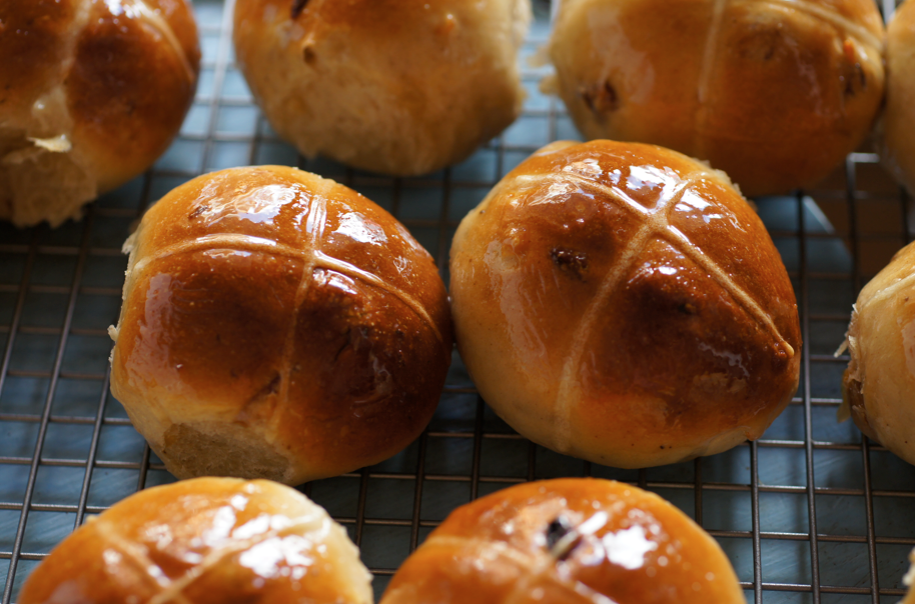
Combine the flour with the water to create a smooth, thick paste (you may need to add a few extra drops of water) then scoop it into a piping bag. Unwrap the buns and pipe the paste over each bun in the cross pattern. Bake for 15-20 minutes until golden brown and hollow when tapped. Brush the reserved peel syrup over the buns then remove to a cooling rack.

Serve split, toasted and topped with lots of salted butter. They freeze very well - I usually split them with a serrated knife then toast from frozen but you can defrost them first too.

(Makes 16)

Edit 27/03/16: This year, I took out the cloves, which was good - less effort for no obvious loss. I've put them as optional above.


Three more recipes that use dried fruit:
Apricot & Fig Tea Loaf
Chelsea Buns
Fig & Hazelnut Crumble Bars
http://www.bloglovin.com/blog/1796585/?claim=c4yxn9tnep3

Saturday, 7 April 2012

Hot Cross Buns v.3


Happy Easter!

As I promised last year, I'm back with volume three of my quest to create a great hot cross bun recipe. I haven't had much time for testing this year, so there are just a few minor changes - I've updated the recipe to include the candied peel process (which I've also adapted again) and refined a few quantities, including upping the yeast for a lighter bun.

It's quite fun (/embarrassing) to see how things have changed - see v.1 and v.2.

***

Also, as you may have seen on my sidebar/twitter/facebook, I am a finalist in the SAVEUR Best Food Blog Awards 2012 in the Best Baking & Desserts Blog category! I am so touched and honoured that I have been picked by the editors from all the nominations.


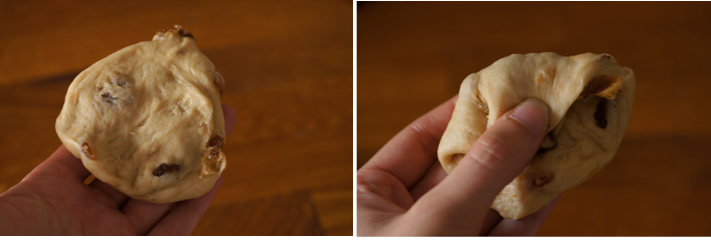
I thought I would show you a little technique I learnt recently for getting smooth, round spheres of bread dough. I was rushing a bit yesterday so some of these buns are actually a bit wonky (and the sultanas and peel poking out don't help), but the technique is a good one.

1/ As you can see on the left, tease the chunk of dough out into a disc using your fingers.

2/ Start tightly folding the edges of the disc inwards.


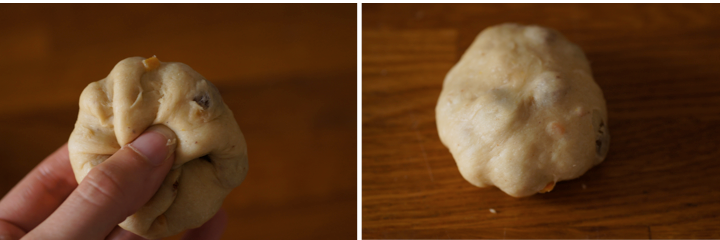
3/ Pull the last edge inwards and press it into the centre, forming a ball.

4/ Place the ball on a clean table (no flour), with the pulled-in edges facing down.


5/ Place your hand over the ball, touching the table with your fingertips and the heel of your hand, and press down lightly. Start moving your hand in small circles, slowly cupping your hand more as the ball forms but keeping it touching the table. The dough should almost push against your hand as it forms.

6/ Voila!

So there you go - a useful little tip for prettier bread rolls.


** If you want to try my hot cross buns, please make version 4 - thank you! **

Hot Cross Buns v.3
(heavily adapted from Delia Smith's Complete Cookery Course)

For the candied peel:
1 orange
1/2 lemon
100ml water
100g granulated sugar

For the dough:
150ml lukewarm water
1 tsp golden caster sugar
15g fresh yeast
450g strong white bread flour
1 tsp salt
1/2 tsp cinnamon
1/2 tsp ground ginger
1/4 tsp freshly ground nutmeg
4 whole cloves, ground
50g golden caster sugar
100g currants/sultanas/raisins
50ml milk
1 egg, beaten
50g butter, melted

For the crosses:
1 tbsp plain flour (not strong)
1 tbsp water

Use a vegetable peeler to take big strips of peel off the orange and lemon - try to have as little white on the inside of the strip as possible. Chop into 2-3mm little squares, stacking a few strips together for speed. Place them in a medium pan and add 3-4 cm of cold water. Bring up to a strong boil and let bubble for a few moments until the water is bright yellow. Strain into a bowl, then add more cold water and the peels and repeat. Repeat again, leaving in the strainer. Throw out the bitter yellow water.

Combine the 100ml of water and sugar in the pan and heat until the sugar has dissolved, swirling every now and again. Turn up the heat a little and add the blanched peel. Occasionally brush a little cold water around the sides to stop the sugar crystallizing. Let it bubble away until the peel is translucent, abut 10-15 minutes. Let cool for five minutes then drain the peel off from the syrup, reserving both.

To start the dough, pour the 150ml water into a small bowl, stir in the teaspoon of sugar and crumble the yeast in. Cover with cling film and leave in a warm place for 10 minutes until frothy. Meanwhile sift the flour, salt, sugar and spices into the bowl of your stand mixer (or a mixing bowl if making by hand). Stir in the dried fruit. Stir the peel into the milk (this stops them sticking). Pour in the frothy yeast mix, warm milk, melted butter and beaten egg. Attach the paddle attachment and mix until you have a combined dough.

Swap the paddle for the dough hook and knead for 6 minutes. (If making by hand make a well in dry to pour the wet into, then slowly pull in to create a dough. Then turn out onto floured surface and hand knead). Place the dough into a lightly oiled big bowl, cover with cling film and leave to rise in a warm place for about 1hr 15 mins or until doubled.

Turn the dough out of the bowl onto a lightly floured surface. Punch down. Cut the dough with a sharp knife into 16 pieces. Roll into balls. Line a tin with baking parchment and then arrange the buns on the sheet. Cover again with cling film and leave to rise for 45 minutes until puffy.

Preheat the oven to 220C (425F). Combine the flour with the water to create a thick paste (adding a little more water if needed) then scoop it into a piping bag or a plastic bag with the corner cut off. Unwrap the buns and pipe the paste over each bun in the cross pattern. Bake for 15-20 minutes until golden brown and hollow when tapped. Brush the reserved peel syrup over the buns then remove to a cooling rack.

Serve either hot from the oven with plenty of salted butter or split, toasted and topped with lots more salted butter. They freeze very well.

(Makes 16)

Wednesday, 20 April 2011

Hot Cross Buns v.2


I am a girl on a mission: I really, really want to create the perfect hot cross bun recipe.

A year ago I tried my first ever hot cross bun recipe. I was so keen I made them on the 3rd of March. It was pretty exciting as a novice yeast baker, though I have to admit that next to the fluffy supermarket buns, mine were like rocks. Then later in the year I was challenged by the Daring Bakers to make Stollen. It was a revelation - I could make light fruited breads at home. And so I resolved to create fantastic hot cross buns when the time rolled around.


I want to create a great hot cross bun because I love them. Partly because they are the perfect excuse to get really crazy with the salted butter. My mum and I really love butter (could you possibly have already guessed this by my blog/career choice...?). I found a lovely motto on The Transplanted Baker the other day - "Good food should be made with butter and love". 

(Disclaimer: I do not eat butter in every meal I eat. I promise. That would be unhealthy. I generally eat really quite healthily at breakfast, lunch and dinner. It's just elevensies, afternoon tea and pudding that usually involve butter... but I'm generally v good at portion control)

So anyway, I really must insist that you try lots of salted butter on your next hot cross bun. It's so much better than unsalted for this and butter is almost as necessary here as it is on a crumpet. 

I've made this recipe lots of times recently, trying to get it just right. It's still not there but I'm on my way. 

The best idea I've had so far is to candy your own orange peel to include in the dough and then use the delicious syrup to brush over the buns instead of golden syrup. When you toast them it bubbles up and gets all sticky and brilliant and the taste adds so much to the overall finish. The buns you see above are the first batch I tried this with and are an example of a 12 bun batch (the others are a 16 bun in a smaller tin). I couldn't resist. 

Because of the inconvenience that is revising for finals, I decided to bring back some of my last batch of candied peel and the syrup from Switzerland in some ziplock plastic bags. They survived the journey but my syrup had crystallized a bit. In trying to liquify it I half caramelised it so the main batch you see have a slightly funny topping. The caramel is pretty great though. Snappy on top. Might have to try it again if I don't have the syrup. 

Also, these freeze really well. Just pop any you don't eat the first day or two in a plastic bag in the freezer. Defrost for an hour or two then toast and butter. Hot cross buns on demand. Perfect for revision. 

I should imagine I'll be back next year with volume three. How exciting. 


** If you want to try my hot cross buns, please make version 4 - thank you! **

Hot Cross Buns v.2
(adapted from Delia Smith's Complete Cookery Course)

150ml lukewarm water
1 tsp golden caster sugar
10g fresh yeast
450g strong white bread flour
1 tsp salt
1/4 tsp cinnamon
1/4 tsp ground ginger
1/4 tsp allspice
1/4 tsp freshly ground nutmeg
4 whole cloves, ground
50g golden caster sugar
75g currants
20g sultanas
40ml warm milk
1 egg, beaten
50g butter, melted
1 tbsp plain flour (not strong)
1 tbsp water 
4-5 tbsp reserved candied peel syrup (or golden syrup)
Lots of salted butter to eat them with

Pour the water into a small bowl, stir in the tsp sugar and then crumble the yeast in. Cover with cling film and leave in a warm place for 10 minutes until frothy.  Meanwhile sift the flour, salt and spices into the bowl of your stand mixer (or a mixing bowl if making by hand). Stir in the sugar, currants, sultanas and orange peel. Pour in the frothy yeast mix, warm milk, melted butter and beaten egg. Attach the paddle attachment and mix until you have a combined dough. Swap the paddle for the dough hook and knead for 6 minutes.  (If making by hand make a well in dry to pour the wet into, then slowly pull in to create dough then turn out onto floured surface and hand knead). Place the dough into a lightly oiled big bowl, cover with cling film and leave to rise in a warm place for about 1hr 15 mins or until doubled. 

Turn the dough out of the bowl onto a lightly floured surface. Punch down. Cut the dough into 12 pieces for big buns or 16 for small with a sharp knife. Line a tin with baking parchment and then arrange the buns on the sheet. Cover again with cling film and leave to rise for 45 minutes until puffy. Preheat the oven to 220C (425F). Combine the flour with the water to create a thick paste (adding a little more water if needed) then scoop it into a piping bag or a plastic bag with the corner cut off. Unwrap the buns and pipe the paste over each bun in the cross pattern. Bake for 15 minutes until golden brown and hollow when tapped. Brush the syrup over the buns then remove to a cooling rack. 

Serve either hot from the oven with plenty of salted butter or split, toasted and topped with lots more salted butter. 

(Makes 12-16)

Wednesday, 31 March 2010

Chocolate Simnel Cake


This is my somewhat alternative interpretation of a Simnel Cake. There's no fruit involved. Just chocolate. Lots of chocolate. It's a dark beauty.

I saw a recipe for Chocolate, Orange and Almond Simnel Cake in April's Good Food and this all built from there. I've made their chocolate marzipan recipe but the rest is different - I've added in coffee instead of orange and used a different cake recipe.


I wasn't expecting huge amounts from the chocolate marzipan. I thought it would be nice - after all, how could a blend of sugar, almonds, cocoa and egg be bad - but I wasn't expecting explosions. We got them. Seriously, please make this. It's fantastic. Whoever came up with this recipe in the Good Food team is a genius.

A few minutes after tasting some, my mum declared:

"It's sort of like a food orgasm, isn't it?"

I was going to simply place a thin disk of marzipan on top and in the middle. I wanted to use truffles instead of marzipan balls on top. Then I became blinded by love of the marzipan and decided to simply totally enrobe the cake with the marzipan and use it for the balls. I was going for indulgence, so why not spread the love down the sides of the cake.


With such a rich and heavy marzipan, I wanted to make a cake that had a deep chocolate flavour but wasn't too dense. I found what I was looking for in Nigella Lawson's ridiculously simple Traditional Chocolate Cake recipe in her big book Feast. It's a great recipe - you just chuck everything in the food processor and you get a lovely light but very tasty cake for all your not so hard work. Indulge yourself with the spare time you're not spending creaming and folding!

I switched the vanilla in the recipe for coffee - I wanted the bitterness and extra flavour to bounce off the chocolate.


To sandwich it all together I made a bitter chocolate ganache with some 85% chocolate, more coffee, the rest of the sour cream and a good dollop of the truly indulgent double cream I was raving about with the Tians. It compliments the sweet marzipan and brings everything together.

I'm really pleased with the way it came together. It's a great change from the normal fruit cake and the marzipan is truly wonderful. It's probably a bit too dark and bitter for little children or people who don't like that kind of thing but using a sweeter filling would sort that out.  You could just use a sweeter dark chocolate or milk chocolate in the ganache, or find another frosting that you like.

We had it for pudding last night with chopped pears and creme fraiche - I can't recommend the combination highly enough.


Chocolate Simnel Cake
(Marzipan from April 2010 issue of Good Food, Cake from Nigella Lawson's Feast )

For the chocolate marzipan:
85g golden caster sugar
100g icing sugar
200g whole almonds
50g dark cocoa powder
1 egg, plus 1 egg yolk

As I prefer grinding almonds myself, I put the almonds in my food processor and blasted them till fine. If using already ground almonds, just put those in the processor. Add the sugars and cocoa and blend to mix well. Beat the egg and egg yolk together and then add to the processor and blend until it comes together. Scoop out onto a piece of clingfilm and then wrap it up and place in the fridge. Keeps for a week in the fridge if you want to make it ahead (though I couldn't guarantee that it won't all be nibbled away by then...)

For the cake:
200g plain flour
200g caster sugar
1 tsp baking powder
1/2 tsp bicarbonate of soda
40g cocoa powder
175g unsalted butter
2 eggs
1 tbsp instant coffee
150 ml sour cream

Take the butter and sour cream out of the fridge (and the eggs, too, if you keep them there). Preheat the oven to 180C. Line and grease two sandwich tins (8"/20cm). Put the instant coffee in a mug/bowl and pour 1 tbsp of boiling water over the top and stir well. When the butter etc is room temperature, simply weigh everything out and put it all in a food processor. Blend until a you have a smooth batter. Measure out into the two tins and smooth. Put into the oven for around 30-35 minutes or until a skewer comes out clean. Remove to a wire rack and cool in the tin for 10 minutes before running a knife around the edge and turning out. When cool place into the fridge to make them easier to split/work with. If you don't have much time, just pop them in the freezer for a 5 minutes.

For the ganache:
100g dark chocolate (I used 85%)
2 tsp instant coffee
60 ml double cream
40 ml sour cream

Chop the chocolate into small pieces and place in a small bowl. Heat the double cream and sour cream together in a small saucepan until nearly boiling then pour over the chocolate, ensuring all the pieces are submerged. Leave for two or three minutes before beating until smooth and glossy. Mix the instant coffee in a bowl with a tsp of boiling water then beat into the ganache.

To assemble:
Split each of the cakes into two (I also trimmed them down to a smaller circumference as I wanted a taller-looking cake).  Sandwich all the layers with the ganache. Put into the fridge and take out the marzipan. Cut an end off and form 11 small balls from it, rolling them in your hands. Put them to one side. Either dust the surface liberally with cocoa powder or sandwich the marzipan between two big sheets of cling film before rolling it out into a big circle. Use a piece of string to check it's big enough. Get the cake out of the fridge and remove one side of the cling film. Place the centre of the marzipan circle over the cake and smooth down. Fold down over the sides and cut off any excess. Stick the balls of marzipan on top and dust with cocoa powder.

Tuesday, 14 April 2009

Fruit and Almond Muffins


Happy Easter! Living here in Switzerland over Easter is a feast of chocolate. I'm really not complaining, it's amazing. But it is partly why I haven't been baking in the last week or so, with all the eggs and bunnies crying out to be eaten (well, maybe not exactly, the poor bunnies always look a bit miserable - but who wouldn't when your only prospect was being eaten!). And we still haven't finished eating the birthday cake leftovers - though I discovered today that the ganache freezes brilliantly. I think a trifle may be in order for the rest of the cake bits, and I'm plotting something to do with strawberry puree, the ganache and something creamy...


So in a rather pathetic attempt to get away from a weekend heaving with chocolate, I made some fruity muffins (well, you could also kind of call them cupcakes, but each to their own. I didn't want to make a heavy fruit cake like the traditional simnel cakes we used to make at Brownies, but something lighter. I started this yesterday, but ran out of time before a big closing party of my favourite apres ski bar - all I had done was start to heat the fruit with the zest and orange juice. This wasn't really a problem, as I just let the fruit seep overnight, which I should do but often lack the patience!


I spent most of today translating Beowulf from the original Anglo-Saxon into modern English for my Old English paper at uni, and kept myself going with the prospect of making something lovely with the seeped fruit. Thankfully I managed to finish the translation and make these before going out to play squash. I didn't really have a recipe in mind, so I decided to play about and see what came out. I used some lovely golden sultanas I had and some raisins for the fruit - currents and normal sultanas would be lovely too. I did think about using some dates, or glace cherries, but thought it might be too sweet.


I made a fairly stiff cake mix, laden with spices, as I knew I had the orange juice in the fruit. It looked a bit too stiff so I added some milk. Then I decided there wasn't enough 'stuff' in them, so I toasted some almonds and chucked them in. It happily made 12 muffins, and I sprinkled them with some flaked almonds. The mix still seemed heavy when I was spooning it out, but the baking powder really lifted them up and they were pretty light - though I think I slightly overcooked them. They went very nicely with a cup of tea after a game of squash...


Fruit and Almond Muffins

(Recipe removed on 05/07/12 as I don't trust it to work!)

ShareThis